
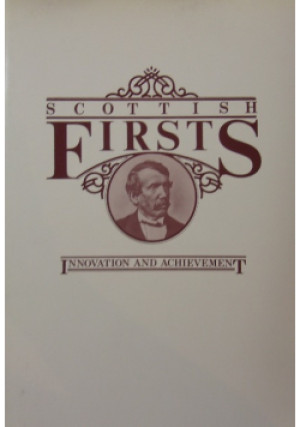
Scottish firsts - Charles Wilson - książka wyd. 1987
Opis
Scottish inventions and discoveries are objects, processes or techniques either partially or entirely invented, innovated or discovered by a person born in or descended from Scotland. In some cases, an invention's Scottishness is determined by the fact that it came into existence in Scotland (e.g., animal cloning), by non-Scots working in the country. Often, things that are discovered for the first time are also called "inventions" and in many cases there is no clear line between the two. The Scots take enormous pride in the history of Scottish invention and discovery. There are many books devoted solely to the subject, as well as scores of websites listing Scottish inventions and discoveries with varying degrees of science. Even before the Industrial Revolution, Scots have been at the forefront of innovation and discovery across a wide range of spheres. Some of the most significant products of Scottish ingenuity include James Watt's steam engine, improving on that of Thomas Newcomen, the bicycle, macadamisation (not to be confused with tarmac or tarmacadam), Alexander Graham Bell's invention of the first practical telephone,[4] John Logie Baird's invention of television, Alexander Fleming's discovery of penicillin, and insulin.